
WELCOME BONUS 300%
UP TO €2000 + 100
FREE SPINS
UP TO €2000 + 100
FREE SPINS
Home → Roulette
Roulette at Spin Fair
Even Chances vs Straight: Variance Comparison
Straight bets on European Roulette pay 35:1 while even chances like Red/Black return 1:1. The house edge remains constant at 2.70% for all wagers on the 37-sector wheel. This uniformity means high payouts do not compensate for the same statistical disadvantage. Players choosing outside bets face lower volatility than those targeting single numbers.
American Roulette introduces a double zero, increasing the sector count to 38. This change raises the house edge to 5.26% for standard bets like Straight or Red/Black. The Five Number Bet on sectors 0, 00, 1, 2, 3 carries an exceptional 7.89% house edge. It is the only wager with an edge exceeding 5.26% on the American wheel.
French Roulette offers the lowest risk via La Partage on even chances. This rule refunds 50% of the stake when zero appears, reducing the edge to 1.35%. Inner bets do not qualify for this protection and retain the standard 2.70% house edge. Consequently, players betting on Red/Black benefit significantly more than those placing Straight bets.
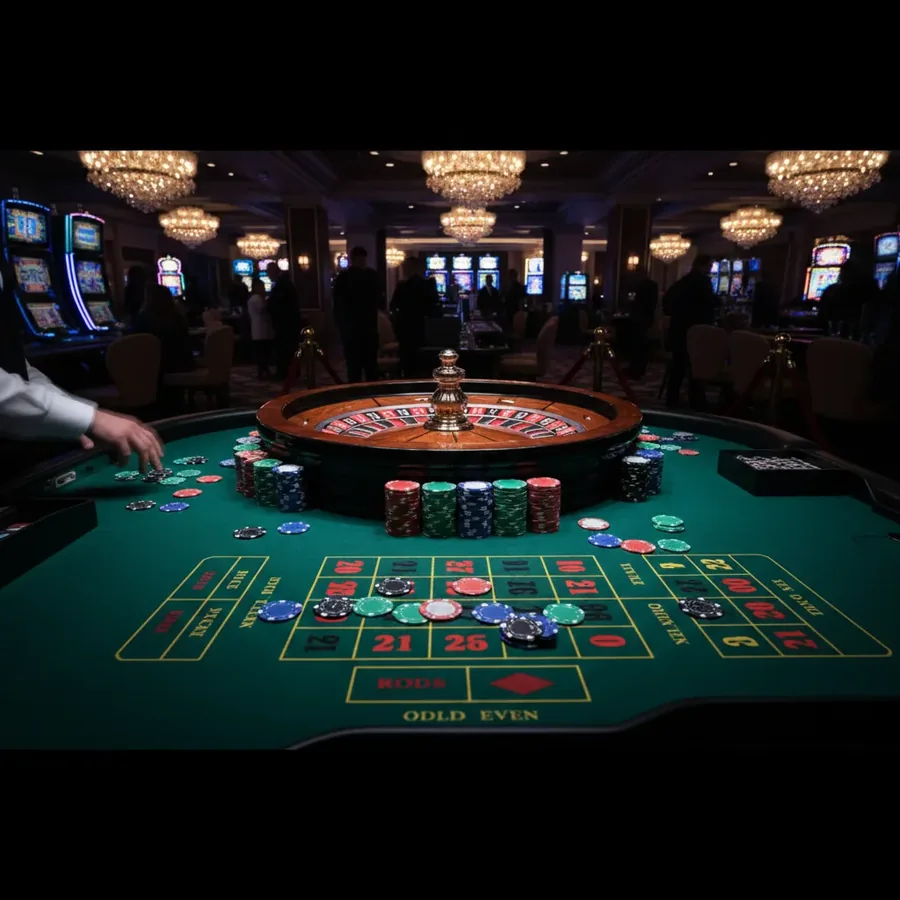
Wheel Speed and Ball Toss in Real Wheel
Lightning Roulette by Evolution features a real wheel with 37 sectors. Lightning strikes between one and five numbers before each spin. These selected numbers receive multipliers ranging from 50x to 500x on winning bets. The base game maintains a standard RTP of 97.30% despite these random enhancements.
Ultimate Roulette produced by Ezugi also utilizes a physical wheel with 37 pockets. Up to five numbers can be assigned multipliers between 50x and 1,000x. A special doubling feature can increase these payouts up to 2,000x. This mechanic adds variance to the standard 97.30% RTP found in traditional live dealer formats.
Auto Roulette Classic 1 Live by Authentic Gaming employs an automated mechanical wheel. The device spins continuously without human intervention from a croupier. Payouts follow standard ratios like 35:1 for Straight bets on the 37-sector layout. The minimum bet starts at 0.10 EUR while the maximum limit reaches 2,000 EUR.
Losing Streaks: 10 Times Red Is Normal
The probability of ten consecutive red outcomes is approximately 0.09% on European Roulette. This statistic indicates that such streaks occur roughly once per thousand spins. Players often misinterpret this rarity as a signal for reversal strategies. The house edge of 2.70% ensures long-term mathematical certainty regardless of short-term variance.
American Roulette presents a higher risk due to the 5.26% house edge. Ten consecutive black results are slightly less probable but still possible within a session. The presence of the double zero increases the frequency of losses on even chances. Statistical independence means previous spins never influence the outcome of the next ball toss.
Bonus wagering requirements impact how quickly players can offset losing streaks. Table games contribute only 10% toward the 40x turnover requirement for the welcome bonus. This low contribution rate slows down progress significantly during extended play sessions. A 2,000 EUR bonus therefore requires substantial volume to clear effectively under these constraints.
What Straight, Split, and Street Practically Mean
A Straight bet covers exactly one number on the roulette layout. Winning this wager yields a payout ratio of 35:1. The probability of success is 1 in 37 on European wheels and 1 in 38 on American variants. This high-risk strategy targets significant returns for every unit staked on the table.
Splitting involves placing chips on the line between two adjacent numbers. A correct prediction pays out at 17:1 according to standard casino rules. This bet effectively doubles the coverage area compared to a single number wager. The house edge remains unchanged at 2.70% for European or 5.26% for American formats.
Street bets cover three consecutive numbers arranged horizontally on the grid. Correct predictions result in an 11:1 payout multiplier for successful wagers. This option offers a middle ground between the safety of even money bets and the risk of straight numbers. All interior bets maintain the same mathematical expectation regardless of the specific configuration chosen.
37 Pockets vs. 38 Pockets: The Difference
European Roulette wheels contain 37 pockets including a single zero sector. This configuration establishes a house edge of 2.70% across all bet types. Payouts remain fixed at ratios like 35:1 for straights and 2:1 for dozens. The absence of a double zero provides better odds for consistent long-term play.
American Roulette features 38 pockets by adding a double zero sector. This additional pocket doubles the house edge to 5.26% for standard wagers. Payout structures like 35:1 for straights remain identical to their European counterparts. The increased edge significantly reduces the expected return for players over extended sessions.
French Roulette with La Partage shares the 37-pocket structure of European tables. However, the refund rule halves the house edge to 1.35% on even chances. Inner bets lack this protection and retain the standard 2.70% disadvantage. This distinction makes French wheels superior for players focusing on low-variance strategies.
Roulette bet types at a glance
| Bet | Payout | Win Chance | Numbers Covered | House Edge |
|---|---|---|---|---|
| Roulette Amerikanisch – Five Number Bet (0, 00, 1, 2, 3) | Five Number 6:1 (deckt 5 von 38 Sektoren) | 92.11% | Einzige Wette am amerikanischen Rad mit Edge über 5,26% – „Fallenwette“. Kein Äquivalent am europäischen Rad | 7.89% |
| Roulette Europäisch (einfache Null, 37 Sektoren) | Straight 35:1, Split 17:1, Street 11:1, Corner 8:1, Six Line 5:1, Dozen 2:1, Column 2:1, Rot/Schwarz 1:1, Odd/Even 1:1, 1-18/19-36 1:1 | 97.30% | 37 Sektoren (1–36 + 0); Auszahlungen wie für 36 Sektoren – daher konstanter Edge auf ALLE Wetten | 2.70% |
| Roulette Amerikanisch (doppelte Null, 38 Sektoren) | Straight 35:1, Split 17:1, Street 11:1, Corner 8:1, Six Line 5:1, Dozen 2:1, Column 2:1, Rot/Schwarz 1:1 | 94.74% | 38 Sektoren (1–36 + 0 + 00); Auszahlungen wie beim europäischen Rad, aber der zusätzliche Sektor verdoppelt den Hausvorteil | 5.26% |
| Roulette Französisch, innere Einsätze (La Partage gilt nicht) | Straight 35:1, Split 17:1, Street 11:1, Corner 8:1, Six Line 5:1, Dozen 2:1, Column 2:1 | 97.30% | Rad gleich (37 Sektoren), aber La Partage/En Prison gilt nicht für innere Einsätze – Edge bleibt europäisch | 2.70% |
| Roulette Französisch mit La Partage (gerade Chancen) | Rot/Schwarz 1:1 (bei 0 Rückerstattung 50%), Odd/Even 1:1, Low/High 1:1; Innere Einsätze ohne La Partage: Straight 35:1, Split 17:1, Street 11:1, Corner 8:1 | 98.65% | Bei 0 wird die Hälfte des Einsatzes auf gerade Chancen zurückerstattet (Rot/Schwarz, Pair/Impair, Manque/Passe). En Prison gibt denselben 1,35%. Regel gilt NUR für gleiche Einsätze | 1.35% |
Calculate Payout: Corner 8:1 Plus Bet
The Straight bet on European Roulette pays 35:1, while the Corner wager covers four numbers for an 8:1 return. This lower multiplier reflects the higher probability of hitting a specific quadrant compared to a single digit selection. Players must weigh the reduced payout against the increased frequency of small wins on the 37-sector wheel.
European Roulette offers consistent odds across all bets with a 2.70% house edge, whereas American Roulette doubles this risk to 5.26%. The Straight payout remains 35:1 in both variants, but the additional zero sector significantly reduces long-term expected value for the player. Consequently, the Corner bet yields a better theoretical return on the European wheel due to its lower volatility profile.
Distribute 500 Euro Bankroll at the Lightning Table
Lightning Roulette by Evolution allows stakes between 0.20 EUR and 5.000 EUR, featuring multipliers up to 500x on random numbers. A 500 EUR bankroll supports approximately 2,500 base unit bets if each wager is set to the minimum 0.20 EUR threshold. This volume provides ample opportunities to trigger the lightning strikes that can drastically alter the standard 97.30% RTP outcome.
How Much Budget Withstands 2.70 Percent House Edge
European Roulette maintains a constant 2.70% house edge across all bet types, including Straight, Split, and Dozen wagers. This mathematical advantage ensures the casino retains 2.70 EUR for every 100 EUR wagered over hundreds of thousands of spins. A budget of 1,000 EUR theoretically loses 27 EUR in expectation, requiring careful bankroll management to withstand variance without depleting funds prematurely.
European or American: Which Wheel Pays Better
The American Roulette wheel contains 38 sectors, including a double zero, which increases the house edge to 5.26%. In contrast, the European variant features only 37 sectors with a single zero, resulting in a more favorable 2.70% edge for players. Therefore, the European wheel consistently offers better long-term returns, as the American version nearly doubles the statistical disadvantage inherent in every spin outcome.
Table Limit 500 Euro Stops Every Doubling
Ultimate Roulette by Ezugi permits bets ranging from 0.10 EUR to 5.000 EUR, accommodating various staking strategies. A maximum table limit of 500 EUR restricts the ability to execute certain doubling systems after consecutive losses. This cap prevents players from recovering deficits through aggressive progression, forcing reliance on the underlying 97.30% RTP rather than martingale-based recovery tactics.
Place Chip Until Rien ne va plus
The American Roulette variant features 38 sectors including a double zero, which increases the house edge to 5.26% compared to the European wheel's 2.70%. This additional pocket reduces the Return to Player percentage to 94.74%, making straight bets paying 35:1 less valuable for long-term retention than on single-zero tables.
Rien ne va plus halts betting after the ball settles, preventing late entries that could exploit live dealer timing gaps in games like Lightning Roulette. Evolution’s version applies multipliers up to 500x on selected numbers, but the base RTP remains 97.30% regardless of these temporary boosts affecting individual spin outcomes.
Table limits range from 0.20 EUR to 5,000 EUR for most live roulette streams, allowing players to place high-stakes wagers during the final betting phase. The maximum payout for standard bets stays at 35:1 for straights, ensuring that even with multiplier events, the core mechanics remain consistent across different live casino providers.
50 Euro Budget at a 1 Euro Table
A 50 Euro budget allows for fifty minimum bets at a table with a 1 Euro stake, though Authentic Gaming’s Auto Roulette Classic starts at 0.10 EUR rather than 1.00 EUR. This lower entry point extends playtime significantly, enabling more spins before the bankroll is depleted compared to higher-limit venues.
The house edge of 2.70% on European wheels means each 1 Euro bet statistically returns 0.973 Euros over time, whereas the 5.26% edge on American variants doubles the expected loss rate. Players using a fixed budget must choose between the longer session potential of low-edge games and the higher variance of American styles.
Bonus turnover requirements count table games at only 10%, meaning a 50 Euro deposit contributes minimally toward clearing wagering conditions attached to the 300% welcome bonus. This restriction forces players to rely primarily on the initial 50 Euro balance for extended gameplay without significant bonus fund integration.
Latency and Betting Window in Live Stream
Live dealer latency affects the precise moment when chips are registered relative to the physical wheel spin, particularly critical in Ezugi’s Ultimate Roulette where bets close quickly. With betting windows lasting only seconds, players must account for network delays to ensure their stakes are accepted before the croupier locks the table.
The betting limit of 0.10 EUR to 5,000 EUR accommodates various strategies, but high-latency connections may cause missed opportunities on rapid-fire tables like Lightning Roulette. Players relying on real-time data must maintain stable internet speeds to avoid losing bets due to transmission lag exceeding the dealer’s timeout threshold.
Evolution’s Lightning Roulette offers multipliers up to 500x, but these apply only to numbers struck by lightning rods after betting closes. Consequently, latency does not influence multiplier generation, yet it directly impacts whether a player’s chip placement registers within the strict operational window defined by the live stream protocol.
European Wheel with 37 Pockets Explained
The European Roulette wheel contains exactly 37 pockets numbered zero through thirty-six, establishing a house edge of 2.70% for all inside and outside bets. This configuration contrasts sharply with the American wheel’s 38 sectors, where the extra double zero raises the house advantage to 5.26% and lowers the RTP to 94.74%.
Straight bets on single numbers pay 35:1, while split bets covering two adjacent numbers return 17:1, maintaining constant odds across all 37 pockets. Dozen and column bets offer 2:1 payouts, providing balanced risk-reward ratios that define the statistical expectation for players engaging with this specific wheel format.
French Roulette variants often include La Partage rules, reducing the house edge on even-money bets to 1.35% by refunding half the stake on zero. However, inner bets like splits and streets remain unaffected, keeping their edge at 2.70% unless specific En Prison rules apply to extend the wager into the next round.
How Long a Session May Last
A 50 Euro budget at a 1 Euro minimum bet theoretically supports fifty rounds if every wager loses, though the 2.70% house edge ensures gradual depletion. At an average speed of sixty spins per hour, this bankroll lasts approximately fifty minutes before hitting the mathematical limit imposed by negative expectation.
Higher volatility games like Lightning Roulette feature multipliers up to 500x, potentially extending sessions through rare big wins despite the same 97.30% base RTP. These unpredictable payouts can temporarily inflate the bankroll, allowing players to continue beyond the standard duration calculated on flat-betting strategies against the house edge.
Auto Roulette Classic operates with automated wheels, increasing spin frequency and potentially doubling the number of hands played per hour compared to live-dealer tables. This accelerated pace reduces the total time a 50 Euro budget survives, emphasizing the importance of selecting slower-paced variants for extended entertainment value.
Contact
Live - online chat
Banking






Providers











Fairspin Casino 2026